⭐🌳The Secret Star Inside the Stem 🌱✨
🌿✨ A follow-up story that connects The Stem chapter with the quiet wonder of The Leaf and the larger patterns of plant adaptation in the Biology Album. 🌳⭐ It invites children to look at stems not as ordinary sticks, but as secret pathways, leaf-homes, and places full of hidden surprises. Beginning with the stem’s great work of lifting leaves toward the light and carrying water through the plant, this story branches into the magical discovery of nodes and internodes—those little places and spaces where new growth begins. From there, the cottonwood opens a tiny door of enchantment: a fallen twig, a snap, a hidden star. ⭐🍂Along the way, children also discover that people have created and told beautiful legends about this star hidden inside the stem, adding wonder, imagination, and human meaning to their botanical exploration. ✨💛 It leaves children with hearts full of admiration and minds ready to investigate the world outside: What other stems are full of secrets? What other trees hide surprises between their nodes? 👀🌿💭
BIOLOGY STORIES
3/24/20263 min read
Today we will look around outside before all the leaves come. 👀🍃 What do you see? Stems everywhere. Some are soft, green, and bendy. 🌱 These are called herbaceous stems. Let’s clap it: her-ba-ceous 👏👏👏👏 They often live for a short time. Others are hard, woody, and strong. 🌳 They grow year after year, becoming thicker and taller. Before the leaves come out and decorate the plant, we can look closely at the stems themselves. Because the stem is not just a stick. It is the home of the leaves, the flowers, the tendrills, the thorns... and many more plant surprises.
But where do the leaves live on the stem? Not just anywhere. They grow from special places called nodes. Let’s clap it: node 👏 The word node comes from the Latin nodus, meaning knot. A node is like a little knot, a little joint, a little meeting place on the stem. And the space between one node and the next is called an internode. Let’s clap it: in-ter-node👏👏👏 The word internode comes from Latin too: inter means between, and nodus means knot. So an internode is simply the space between the knots.
So now we know something important. A stem is not one long plain piece. It has places and spaces. Nodes… and internodes. Places where leaves and buds can begin, and spaces in between. 🌱✨And today, before the leaves hide everything with their green decorations, we are going to investigate twigs — little woody stems from trees and shrubs. 🍂🔍
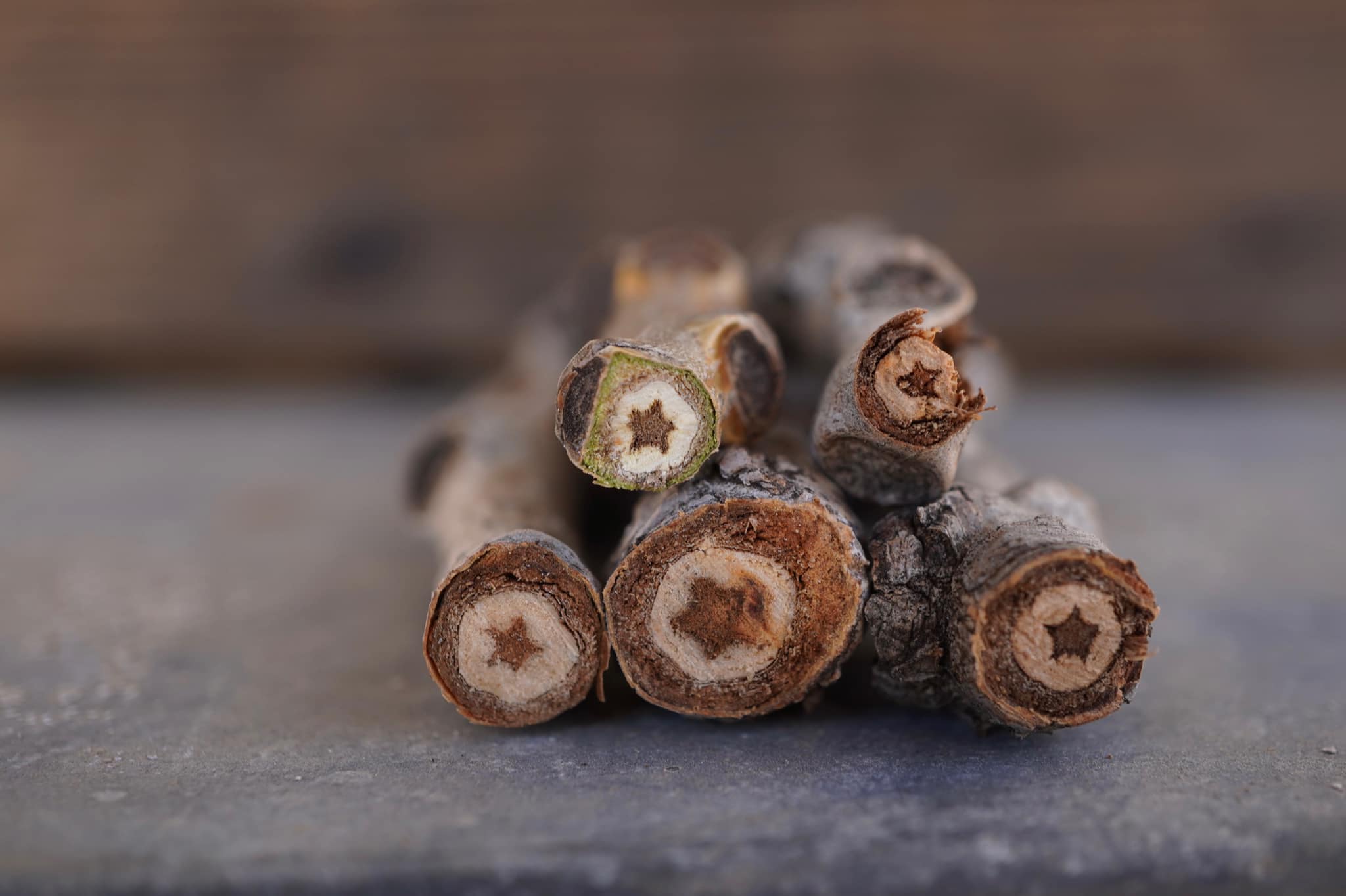
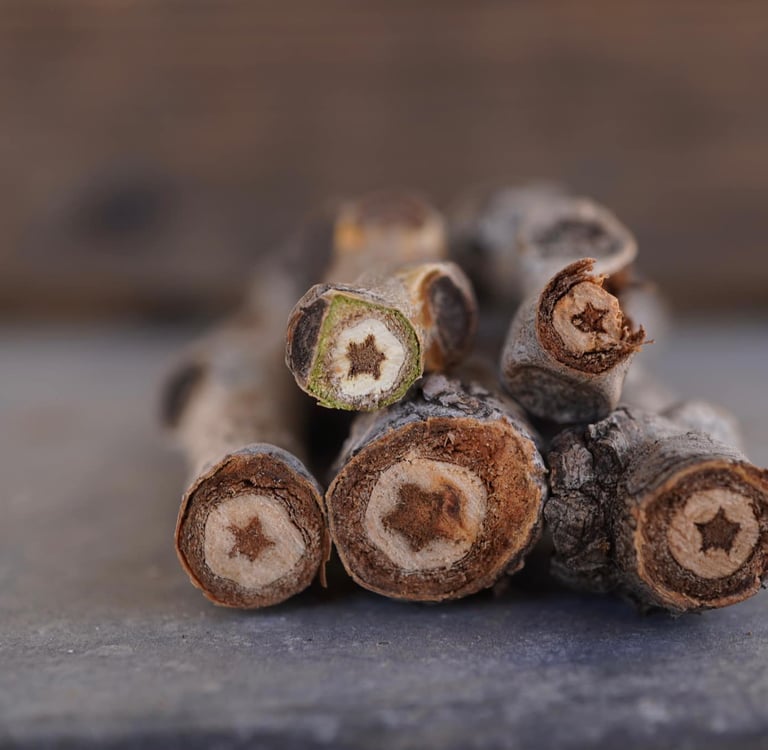
Now look at this twing I brought from a special tree: the cottonwood 🌳, which is also a kind of poplar. If you pick up a small fallen cottonwood twig and snap it near one of its nodes, you may see something astonishing inside. Hidden in the middle is a tiny star. ⭐ A five-pointed star, tucked right into the twig.
People noticed this long ago and made beautiful stories about it. 💛 The Cheyenne and Arapaho are Indigenous peoples of the Great Plains of North America — wide grasslands where the sky feels enormous and the wind can run and run without bumping into many walls. In stories told among the Cheyenne and Arapaho, the stars were said to travel up through the cottonwood and wait hidden in the twigs until the wind broke the branches and released them into the sky. ✨💨🌌
The Lakota, another Plains people from the area, also hold the cottonwood as a sacred tree. For them, this was not just any tree standing in the wind. 🌾💨 It was a tree used in the Sun Dance, a very important ceremony of prayer, courage, and renewal. In this ceremony, a cottonwood was chosen as the great tree in the center, helping people remember their connection to the earth below 🌍 and the sky above 🌌. Maybe they also noticed the stars hidden in the nodes of the twigs?
So here is a stick that is not only a stick. It is a stem. 🌿 It is a lifter, a carrier, a great plant builder. It holds the leaves up to the light ☀️, carries water up from the roots 💧⬆️, and helps move food to where the plant needs it. It has nodes and internodes. It is the home of leaves not yet opened. 🍃 It is the strong bridge between the roots below and the hard working leaves. 🌍➡️☀️
Now we can look again with the eyes of botanists. 🔍🌿 Where are the nodes? Can you find the little joints where buds or leaves begin? Can you see the internodes stretching between them? And if a cottonwood twig can hide a star inside, what other shapes the stem might stems be hiding?
And I wonder… 💭 What other trees or plants have easy-to-see nodes and internodes? 🌿 Do any other twigs hide surprising shapes inside? ⭐ Now let’s go outside and investigate. Collect some fallen twigs, snap them, and look carefully at the shapes hidden inside. What tree hides what shape in its nodes? Sketch and color the cross-sections of your discoveries. 🎨🍂 Maybe we can even begin to recognize some trees just by their twigs. 🌳🔍 Or you can investigate one particular tree and find more legends told for it by different tribal people?
With Montessori joy,
Vanina 😊