The Night-Shift Food Factory🌙🏭 The Aloe 🌿
🌿⭐ A follow-up story that connects The Leaf and The Plant chapters in the Biology Album—and serves as an invitation to zoom in on the potted plants in our environment, to look closely, feel textures, and imagine.👀🤲✨ When we meet The Night-Shift Food Factory (our Aloe), the children don’t just hear another plant story—they get prepared for real plant investigations: real specimens, richer nomenclature, and experiments that reveal the leaf’s invisible work as a “food factory.” 🌞🍃💧 This story becomes a quiet doorway into the outdoor environment too—an invitation to search for other thick, fleshy leaves, to compare them, to cut and observe, and to ask deeper questions. 🌿🔍 The children leave with wonder: Which plants store water in their leaves? Are all succulents keep their stomata closed during the day? And with that curiosity sparked, they’re ready to go out, collect, sketch, research, dissect, zoom in, and experiment as joyful young scientists. 🧪🗺️📓✨
BIOLOGY STORIES
3/4/20264 min read
Let’s begin by observing this plant I brought today. 👀🌿
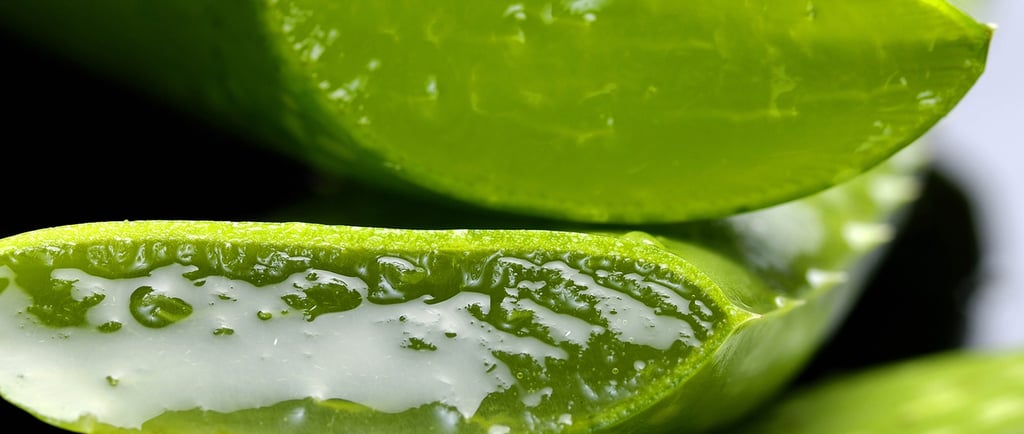
Look closely at its thick, juicy leaves that grow in a circle like a green star ⭐. . If you gently touch a leaf, it feels firm, as if it’s holding something inside. 🤫. Along the edges are sharp teeth, like a little plant-saw 🦷🌱 . The name of this plant, Aloe, likely comes from an Arabic word connected to a “bitter/shiny substance” (because of the bitter sap hidden inside ), and the second name, vera, comes from Latin vērus, meaning “true.” So together it points to the idea of the “true aloe.” And Aloe has a huge family: there are hundreds of Aloe species, more than 500, but Aloe vera is the one that became the most popular of all. ✅🌿
In nature, this plant grows in places that are hot and dry ☀️🏜️—where the soil can crack like a broken cookie 🍪. Many plants would droop and complain 😩… but Aloe stands there looking prepared.
That’s because inside each leaf is a hidden treasure: cool, clear gel 💧—almost like plant jelly. Can you see how thick those leaves are? That’s because Aloe is a succulent plant. “Succulent” comes from Latin sucus, meaning “juice” or “sap” 💧, so a succulent is basically a “juicy plant” built for storing water.
This smart plant has a clever trick that’s invisible to our eyes, so we may need to imagine it. ✨ Remember: each leaf has tiny pores called stomata (a word that means “mouths”). Plants use these tiny “mouths” to take in what they need from the air.🚪🌿.But here’s the desert problem: in the hot daytime ☀️, open stomata would leak water, like leaving your water bottle uncapped in the sun 💧😬. So Aloe keeps most of those little doors shut during the day.
But when the sun sets and the air cools 🌙❄️, Aloe opens those tiny doors and “breathes in” the gas it needs from the air: carbon dioxide (CO₂). Now here’s the problem… it’s nighttime! No sun, no “power switch,” so the leaf factory can’t run yet 😅🌙. So Aloe does something brilliant: it doesn’t use that CO₂ right away—it stores it inside the leaf overnight, like putting ingredients in the fridge 🧊 so they’re ready for cooking later.
Then morning comes 🌞. The stomata stay mostly closed to protect water, but the “leaf food factory” turns on anyway. Sunlight is the power switch 🔆, and Aloe uses that stored gas (CO₂ ) plus water to make its plant food (sugars)—ta-da! 🍃✨ So Aloe is like a factory that shops for ingredients at night 🛒🌙 and cooks during the day 👩🍳🌞. And while it’s doing all that, those thick leaves also act like a storehouse, keeping extra water tucked safely inside for the next dry day 🥤🌿💧.
People living in the places where Aloe grows noticed these thick, mysterious leaves. And being curious… what do you think they did? Experiments! They discovered that when they applied the gel on their skin, it felt soothing—especially on skin that was hot or irritated 🔥➡️💧. Little by little, Aloe vera became the kind of plant people kept close, like a spiky green helper that lived right in the home 🧰🌱. In ancient Egypt, Aloe became so admired that later writers describe it as part of royal beauty traditions 👑✨, and it was even celebrated with grand names—sometimes called the “plant of immortality” in retellings of its long history.
People found also the bitter secret of Aloe—the yellow latex, which is very bitter😖, and this is not the same as the clear gel. That bitter layer became famous for being a “hurry-up potion”… the kind that can make your tummy say, “Emergency meeting in the toilet! 🚽🚦🤣
Now, in many places all over the world, Aloe vera became the kind of practical household plant people like to keep nearby—spiky on the outside, useful on the inside 🌿🏜️.
I wonder… 👀🔎 Which plants in our environment are succulents? Do they also have thick, water-storing leaves like Aloe? 👀🌵 Are there other plants that open their stomata mostly at night—collecting their “ingredients” in the cool dark hours—and then waiting for the sun to turn on the factory in the morning? 🌙➡️🌞💧 And what do people do with Aloe gel?
Possible Follow-up Explorations🔪👀💧
Aloe Leaf Investigation Tray 🥄🔍 + Poster The Magic of Aloe Gel 📓✅
Set up a tray for careful observation and discovery: locate the clear gel and the yellow latex and keep them separate (do not mix them). Describe each one —color, texture, stickiness, temperature, smell, record your observations. Then research: How do people use the gel? Create a class poster with hand-drawn illustrations and “recipes” (e.g., gel cubes, gel + water shake test, skin-care traditions), always noting sources and clearly labeling gel vs. latex.
Microscope investigation 🔬🍃
Observe the Aloe leaf under a microscope: look for the long parallel “lines” inside the leaf (the vascular bundles/“tubes” that run lengthwise), then examine a tiny sample of gel. What does it look like up close, smooth and clear, grainy, watery, or with tiny bubbles trapped inside? Can you sketch what you see and label it?
Gel Texture Lab 💧🧪
Compare gel in different conditions and record changes: gel cubes vs. gel rubbed between fingers vs. gel shaken with water in a jar vs. gently warmed gel vs. cooled gel. Note what changes (slipperiness, thickness, clumping, separation, foam, clarity), and make a simple results chart: Test → What I noticed → My guess why.
“Succulent Leaf Hunt” Going Out 🌿🧺
Go outside to search for thick, fleshy leaves (succulents and other water-storers). Compare and disect : leaf thickness, surface (waxy/matte/hairy), shape, and how the plant is arranged. Sketch the layers, any visible “tubes” running through, storage.
Night-Shift Plants Research 🌙📚
Research plants that are “night-shift breathers” (CAM plants)—plants that open their stomata mostly at night to save water. Each child makes a research card: plant name + drawing + where it lives + one fact about how it saves water. Add a class question board: “Why would breathing at night help a plant survive?”
With Montessori joy,
Vanina 😊