☁️✨The Mysterious Cloud That Touches the Ground - The Fog 🌫️
☁️ A follow-up story that connects to The Work of the Air and The Work of Water chapters in the Geography Album 🌬️💧— and gently builds a bridge to Human Geography, revealing how the fog catchers in the Atacama Desert and Namibia are clear examples of how humans observe natural phenomena and invent tools to meet their needs. These tools help people adapt to extreme environments where fresh water is scarce. The story shows how such inventions reflect interdependence between humans and the environment, showcasing creativity, resilience, and problem-solving. This story invites children to witness a magical moment in the water cycle — when a cloud comes down to Earth and becomes fog. ☁️ And it leaves them wondering: “How do the fog nets work?” 💧 “What other animals have adapted to live in foggy environments?” 🐞🌫️
GEOGRAPHY STORIES
10/19/20254 min read
We’ve been talking about the water cycle — how the sun warms water and it evaporates, rising into the sky as invisible vapor. Then, when it cools down, that vapor condenses into tiny droplets and forms clouds. ☁️💧
And oh, what a sky show clouds can be! Some are high and thin like stretched silk.
Others are thick and grey, carrying tons of rain inside thir big bellies.
Some drift quickly. Others seem to sit still. And some… come down to touch the Earth. 🌍
During the day, the sun warms both the air and the land. But at night, when the sun goes away, something interesting happens: The land gives up its heat quickly, cooling down fast. 🌬️ The air above it holds heat longer, so it stays a little warmer.
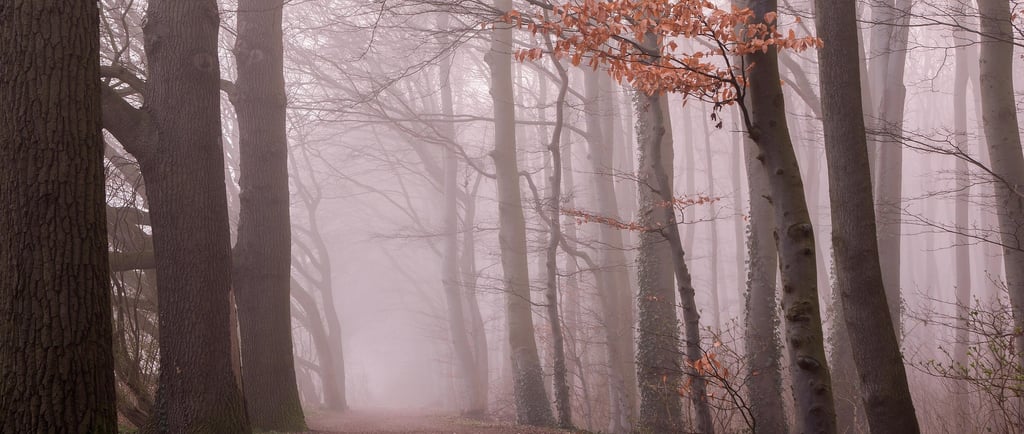
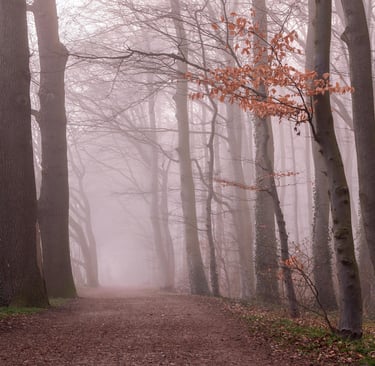
Then, on certain mornings, when the air near the ground is warm and moist, and the ground is cooler, something magical begins to happen…
The invisible water vapor in the air starts to change. It turns into millions of tiny droplets of water — so small we can’t see them one by one. But together, they float… and float… and wrap the whole forest in softness. 🌫️🌍 When this cloud touch the ground, the trees blur, the houses fade, sounds feel quieter, everything feels a bit mysterious.
This gentle guest that comes sometimes in the morning ? It’s called fog, from old English — fogga, which meant something like “mist” or “spray.” 🌫️Long ago, people used this word to describe the air when it felt thick and hard to see through… and that old word stayed with us until today.
Fog visits every continent and many kinds of places — forests and deserts, oceans and mountains, big cities and tiny villages. It doesn’t belong to one land or people — it’s a traveler, a guest of the Earth. 🌍🌫️ Everywhere it goes, fog reminds us of something gentle but powerful: 🌬️ That water likes to jump on air’s back.
☀️ If we travel to one of the driest places on Earth — the Atacama Desert — we might be surprised by what happens early in the morning. Even here, where it almost never rains, a thick fog rolls in from the Pacific Ocean. 🌫️🌊 People who lived there noticed this mysterious visitor… and had an idea. What if the fog could give them water? So, they stretched out giant nets across the land — like spiderwebs for the sky — and waited. Tiny droplets from the fog collected on the nets, and slowly… drop by drop… water began to fall. 💧 They caught the fog — and drank its gift.
And something very similar is happening far away in Africa, along the Skeleton Coast of Namibia. 🇳🇦There, where the desert meets the icy Atlantic Ocean, dense fog rolls in nearly every morning. The people there also set up fog-catching nets to collect fresh water from the air — just like in the Atacama. 🌬️🌫️ Even animals have learned the trick! The clever fog beetle climbs up a sand dune and lifts its back toward the sky. Little droplets gather on its shell and roll right into its mouth. 🐞💧
Far across the world, the Blue Mountains in New South Wales, Australia 🇦🇺 are often blanketed in morning fog. The air fills with cool mist and the scent of eucalyptus trees. 🌿 Sometimes, the fog catches the light in just the right way — reflecting soft blue hues across the cliffs. That’s how the mountains got their name. 💙
And in San Francisco, the fog is so famous, it even has a name: Karl the Fog! 🌁 He rolls in from the ocean and slips between the bridges and buildings like an old, familiar friend.
But fog isn’t just a part of science — it’s also part of human imagination and historical stories…Long before people understood condensation of water or weather patterns, they tried to explain fog through myths and mystery.
In Norse mythology, fog had a special place. People believed the world was born from a cloud of mist. Long, long ago — before there were people, trees, or even the sun — there was only nothingness. No land, no sea, no sky. Just a vast emptiness the Norse people called Ginnungagap — the yawning gap. And then, when the howling heat of fire and the icy breath of cold met in the middle, the first beings were born — out of fog and frost, fire and light. 🌫️❄️🔥
🌫️🌍🕊️ And in some Indigenous American traditions, fog is seen as a messenger — a soft sign that the spirits are moving between worlds, or that the Earth is taking a breath.
Fog travels all over the world! From the cold forests of Norway, to the hot sands of Namibia, from the mountains of Japan, to the coasts of Chile, even through the bushlands of Australia — fog comes quietly, carrying water, stories, and mystery.
💭 I wonder… 🔍 How do the fog nets work — the ones people build in the Atacama Desert and in Namibia, to catch water from the air?
💬 You can pick one of the questions and become a fog explorer yourself!
⛵ What happens when boats sail through fog? How do they find their way?
🦉 What do animals do in foggy weather? Can they see or hear better than we can?
✈️ How do pilots fly through fog?
🌫️ Can we predict fog before it arrives? How?
📜 Can you find other legends about fog from different cultures? What did people long ago believe about it?
With Montessori joy,
Vanina 😊