The Games that Gathered the World 🏛️🔥🏃♀️ the Olympics 🏺🔥👟
🏛️ A follow-up story that branches from the Chapter “The history question & answer charts and work with early civilisations” in the History Album and build bridge with the Chapter “Handwork & Folk Art” in the Art Album 🏺✨ With this story, children feel human tendencies in action—movement, order, exactness, imagination, perseverance, community—as we “read” the games painted on ancient clay from Olympia. Those scenes spring to life in their imagination—runners 🏃♀️, chariots 🐎, discus & javelin throws 🥏🎯, long-jumpers with halteres 💨, wrestlers/boxers 🤼, and a torch run 🔥—and they discover how a single sacred race blossoms into today’s rotating Olympic Games. From festival , born in the ancient city of Olympia, children trace invisible threads between past and present, woven with an olive wreath. 🌿 This story swings open doors to explore sports and traditions and to wonder: 💭What do the five colorful rings mean—and why those colors? Which country has the most gold medals? How far ahead are host cities chosen (and when might the Games be in our country)? Which sports were removed or returned, and why? 🗺️📊🔥
HISTORY STORIES
2/10/20266 min read
All over the world, now and long ago, people find reasons to celebrate. 🎊Births, harvests, victories, new moons… any good moment turns into music, food, and friends.
About 2,800 years ago in Greece, one special celebration was held in a sunny valley at a sacred place called Olympia. There, people gathered in a large field with a track to honor Zeus—sky-ruling king of the Greek gods, keeper of thunder and lightning. ⚡️🏛️
Like many festivals, there were gifts at the altar, songs to sing, and special foods to share. But this festival had something extra—a race of pure speed! One quick dash called the stadion (clap it: 👏 sta-di-on 👏). The word stadium comes from that dash—the length of the track! Dust puffed under toes as runners offered their very best as a gift to the gods: a short, fun, fair race.🏁🔥
The sprint was about 192 meters—think almost two soccer fields end-to-end. Imagine the hush, then the shout—“Ready… set… GO!” !There were no running shoes back then, just tough, brave feet flying over the track. In ancient Greece, men raced without clothes (that was normal there) 🏁🔥 Just imagine, not just bare feet but bare bodies too! 🎉
Back then there were special long-distance messengers—called by the Greeks “day-runners”. 🏃♂️ They were dressed of course! 😅 Their job was to cross mountains and valleys in a couple of days and bring news on foot, no roads, no phones, no modern forms of transportation. You might think one of those runners would win the stadion, of course!
But—surprise! The very first champion wasn’t a famous messenger at all. It was… a cook! 🍞👨🍳 A quick-footed baker burst through the finish first, maybe with a little flour still on his hands and a big love for sprinting in his chest. 💨
And the prize, was also surprise! Only first place counted as important. There were no medals. The champion received the kotinos (clap it: 👏kó-ti-nos)—a crown of olive branches. Coming from the greek word for “wild olive tree”. 🌿
Those leaves meant everything: better than a gold medal, they offered free meals in your city (hello, VIP dining! 🍇), best seats at events 🎭, your name sung by poets 🎶, and sometimes a statue—a life-size marble “selfie” forever striking a heroic pose. 🗿 You had to choose your best pose because the entire city will admire you forever!
The festival gathered athletes from many cities around Greece—strong soldiers, swift messengers, sturdy sailors. But in those ancient Olympic Games women could not compete. There was a separate festival with footraces for girls and women in honor of a goddess, but that’s a story for another day! 👟
People loved that sporty festival so much they kept a steady four-year rhythm called an Olympiad. ⏳In the years between Olympic festivals, other games took their turn in different Greek cities—each with its own leafy wreath as a crown. each with its own leafy crown: wild celery 🥬, laurel 🌿, and even pine wreath crown 🌲.
As celebrations often do, the Olympic festival grew. Little by little, more challenges were added—longer runs, not just a stedium sprint, throwing the discus like a flying sun, throwing the the javelin like a straight spear of air, a long jump with a whoosh, and the powerful dance of wrestling and boxing. Through it all, the idea stayed the same: measured courage and skill with care and fairness. ⚖️💪
Centuries later, the cheering grew quiet. New rulers and a new religion arrived, people stopped celebrating the Greek gods,the cheers faded into the air and the Games stopped. 🌿⏳
More than a thousand years passed. New festivals were born, but nothing quite like the Greek Games in Olympia. Then curiosity woke up. As archeologists gently dug in the ruins, found many ceramic storage jars with painted stories on them. Vessels, with illustrations of different Games. These pictures are like ancient sports photos, painted in clay. 👀🏺Example 1 - "The Runners" In Greek art, the stadion sprint was a favorite scene; painters often showed several runners in one line to capture motion. Example 2 and Example 3- “Long throw!”🥏🎯 an athlete holds a round disc or a spear. Events like discus and javelin were tests of exactness—how steady can your body be before a powerful release? Example 4 “Wrestling dance”🤼 Wrestling and boxing were called the “heavy” events, becaause they were tests of strength and control. Example 5 "The Chariot"🐎 Chariot races were part of the ancient Olympic Games in a big track called the hippodrome. (hippo = horse; dromos = course) The owner of the horses—not always the driver—was the official winner who got the olive wreath.Fair? I don't think so! Example 6 "The Torch Long Run"🔥 Ancient Greeks loved torch races, teams ran—often at night—trying to pass the flame without letting it go out. It was a test of speed and carefulness together.
People read old stories, studied the pictures, and could almost hear the cheers again. Bringing the Games back sounded wild—but it came true! 🌍🤝
And so, about 130 years ago, the modern Olympic Games were reborn in Athens, Greece. This time countries competed against countries, and new sports were added. Athletes from 14 countries came together for the first time in more than 2,000 years! The prizes were medals: silver for first and bronze for second. 🥈🥉
A few years later, when the Olympics were hosted in the city of St. Louis, Missouri, USA. The prizes got an upgrade to the shiny trio we know today: first place with gold = GO!, second place with silver = still super!, and third place received bronze = brilliant too! 🥇🥈🥉
Over time, so many sports joined the modern Olympic Games that one big party couldn’t hold them all. There was a problem: some sports need sun and grass, and others need snow and ice—you can’t surf on a frozen lake or sled on green grass! So the Games split into two parts: Summer Olympics for warm-weather sports ☀️ and Winter Olympicsfor snow-and-ice sports ❄️. Each one happens every four years. They take turns, so there’s an Olympics every two years. And different countries around the world take turns hosting—not only Greece.
As love for the modern Olympic Games grew, more and more countries joined the fun competitions. But if you wanted to see them, you had to travel to the host city. About 100 years ago, there was no TV or internet—people listened on the radio. 📻 A little later—around the time your great-grandma was born, let's say a little over 90 years ago—the Games were shown on television for the first time. 📺 Today, satellites and the internet carry the celebration everywhere—even to ships at sea and scientists in space. 🛰️📱 Now everyone can cheer for the athletes in real time!🎉
Years passed, new sports joined the Olympics and others were removed. For example, tug-of-war was once part of the Games. 🪢💪 Today new sports arrive to test fresh skills—skateboarding, and even breaking(a real dance battle!). All of these show how humans keep exploring what the mind and body can do together—focus, balance, strength, rhythm—working in marvelous ways. 🎯🤸♀️🎶
People break records year after year—but not always! Sometimes the Olympics bring extraordinary stories. In Stockholm, a marathon runner felt too hot in the summer sun. He stepped off the course, and a kind family invited him into their garden, gave him orange juice, and let him rest in the shade. 🍊🏡 After a while he felt embarrassed for stopping, and instead of going back to the race, he quietly went home without finishing Then, 54 years later, he returned and completed his race with a smile. His story shows that it’s never too late to finish what you start. ⏱️😅
The Modern Olympics reveal human tendencies you carry, too: movement, determination, exactness, discipline, repetition, and perseverance. They bring us together to cheer everyone’s effort and to wonder who will take the gold this year? 🥇
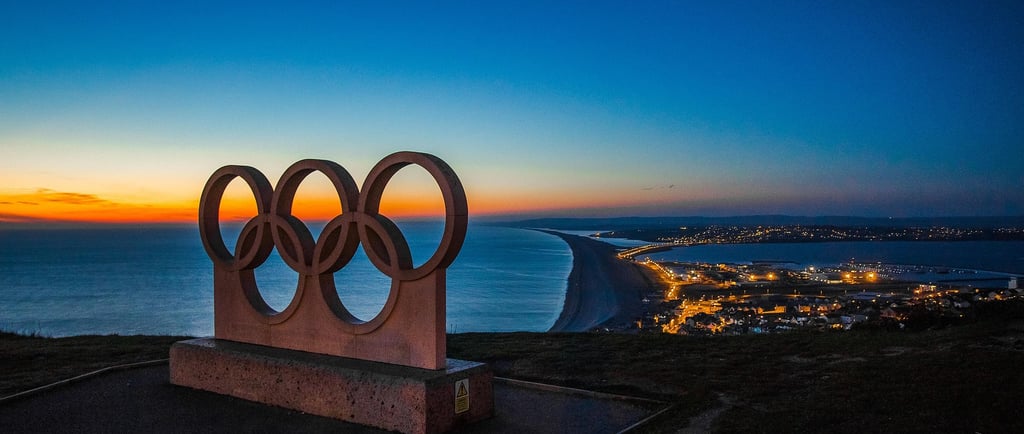
Now I wonder… 🤔💭 How old is the youngest athlete in the Olympic Games? 👶 What do the five colorful rings which represents the Games stand for? 🔵🟡⚫️🟢🔴 Why were those colors chosen?
Which country has won the most gold medals so far? 🧮 Are all winter Olympics hosted in countries with mountains and snow?
How many sports are in the modern Olympics right now? 🔢 Which sports were removed (or returned later)? 🔁 👩 When did girls and women first join the Modern Olympic Games?
🎯🤺 Possible Follow-Up Olympic Explorations 🏃♂️🔥
Winter Olympics World Map ❄️🗺️
mark every Winter host city since the modern Games began (Winter: 1924–today).
Materials: political world map, fine-tip markers, color pencils (two colors), ruler.
Summer Olympics World Map ☀️🗺️
mark every Summer host city since the modern revival of the Olympic Games (1896–today).
Materials: political world map, fine-tip markers, color pencils (two colors), ruler.
“All About a Sport” Poster 🎨📌
research + design a one-page poster about any Olympic sport.
for example Curling: Chess on Ice ♟️🧹🧊 Your poster should include the following information;
Name + Pictogram
How it works (3 rules)
Equipment sketch
How to win / scoring
Etymology (1 key word)
Fun fact (wow!)
With Montessori joy,
Vanina 😊