Stories of Human Migration: The Nomadic Hunters 🛖
🚶♂️ A follow-up story branching from the chapter Early Humans towards the chapter Migrations in the History Album. 🌍✨ It invites children to imagine life as early nomadic hunters—gathering, sharing, and moving as a team to survive in ever-changing environments. 🍖❄️🏜️ As their needs for food, shelter, and belonging are challenged, they adapt with clever tools and new traditions. 🔨🎶 From frozen tundras to river valleys, their footsteps leave behind more than just tracks—they carry songs, stories, and symbols of spiritual life. 🔥🎨 This journey connects invisibly to other stories in the chapter: how different environments shape shelter types, the birth of cooperation and trade, and the resilient thread of human creativity. 🛖🛶💬 It invites children to research further: "How do different nomadic groups build homes they can carry? What materials do they use in deserts, tundras, or grasslands?"🎒🌄💭
HISTORY STORIES
11/25/20255 min read
🌍 Do you remember the Story of Life? What kind of being appeared at the end of the timeline?
A new kind of being—one with special gifts: a powerful mind that could imagine and remember, a hand that could shape and create, and a heart that could love beyond its own kind. 🧠🤲❤️
We also discovered in The Story of the Coming of Human Beings, that this new creature was unlike any other: “It was not the biggest or strongest of creatures that changed the world—but a creature that used its imagination, that could invent tools and remember things. This special being painted on cave walls, and began to live in groups, helping one another survive.”
These gifts helped early human beings transform their environment, build tools, share ideas, dream and wonder just like you now. But they also helped us respond when our needs were no longer met.
Humans were not made to stay still. You simply couldn’t—because if you didn’t move, you might not find food… or you might become someone’s food! 🐅 Imagine yourself with no clothes, no shoes, no backpack, no flashlight—nothing you see around you existed yet. Not because someone took it away, but because it simply hadn’t been invented. You were born into the forest, just as you are. 🌲🦶What would you do?
You would have to observe. Adapt. Move. You’d need to find water, chase your dinner, or run from something that thought you were dinner. You might spot an animal with thick, warm fur and think: “Hmm… could I wear that?” And just like that, a new idea begins: a coat, a blanket, maybe even a tent. 🧠🦴🛖
For thousands of years, our ancestors have migrated across the Earth—following rivers, chasing herds, escaping droughts, inventing tools, and searching for places where they could meet their needs. 🌎🧭 My story today is about those journeys—and the deep human need to meet both our physical and spiritual needs, wherever we go.
People all over the world have the same fundamental needs—some are physical, like food, water, shelter, or even defense. To protect ourselves from those animals with sharp teeth and claws we have invented tools.🍖💧🏕️ But we also have spiritual needs—like art, beauty, storytelling, and love. 🕊️💡❤️ No matter where we live, humans always find ways to meet these needs.
Sometimes, when we can no longer meet those needs—when food becomes scarce, water dries up, or seasons change—we make a big decision: we move. This movement is called migration, from the Latin migrare, meaning to move. 🚶♂️➡️
Migration is a tough choice. It means leaving the land where we were born 🌄, the places where our traditions were built 🏠. New lands mean new climates 🌦️, new challenges, new shelters 🏘️, and even new animals or plants . And whenever we migrate, we carry our traditions, but we must often create new ones, too.
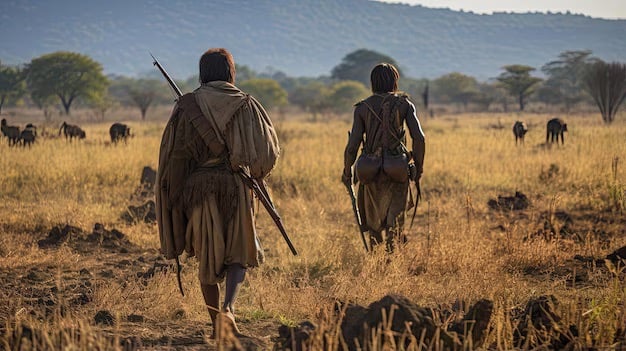
One of the earliest forms of migration began with nomadic hunters—humans who followed herds across big distances. 🌍 They had no permanent home; wherever the animals went, they followed. 🏹The word nomad comes from the Greek word nomas, meaning “roaming for pasture.” 🛖Nomads carried everything they needed, just like you pack your things when you go camping or stay over at a friend’s house. 🎒🔥🏕️
🌍 If you were nomadic hunter living 20,000 years ago. You will move with your family with the seasons 🍂. You will work together with your family every day—not going to school but hunting 🏹, gathering 🫐🥔, listening and telling stories 🔥, and creating art 🎨 to meet your physical and spiritual needs.
You cross forests 🌳 and icy lands ❄️. You follow mammoths 🐘, working together to drive them toward cliffs 🏞️ so everyone can eat. Nothing from the mammoth goes to waste—the furry coat becomes warm boots and blankets, the tusks and bones hold up the roof of your shelter, and maybe… you even make yourself a necklace from a saber-toothed cat’s tooth or a carved toy of mammoth ivory. 🧤⛺🦷✨
And when the land changes—when plants stop growing 🌾, when rivers run dry 🚱—you pack up your few belongings, because you only carry what you truly need. You move on with your family, but not empty-handed: you carry new discoveries, new skills, and new stories to tell around the next fire. 🔥📖🌌
Sometimes you meet other groups 👥. You might trade berries 🍇, share tools 🔨, or learn a new way to start a fire. Other times, you must protect your family ⚔️. You never know what’s waiting beyond the next hill ⚠️—a strange, powerful animal you’ve never seen before… or maybe a hidden oasis filled with the juiciest fruits you’ve ever tasted. 🐾🍉✨ With curiosity and courage, you keep moving forward—because deep down, you’re searching for a place that can meet your needs. 🌟
🏕️ But this type of migration didn’t end with early humans. Groups of people all over the world still move with the seasons in search of food, water. From the icy lands in the North to the camel trails in the deserts , nomadic peoples have found unique ways to live in harmony with nature. 🎒🔥 What stories do they tell? What homes do they build? What songs echo across their landscapes? 🎶🌍
🏞️ Migration didn’t end with the first humans—people all over the world still move in search of food, water, freedom, and a place to call home. From the icy lands of the reindeer herders to the sun-baked camel trails of the desert, nomadic peoples have found extraordinary ways to meet their needs and live in harmony with nature. 🎒🔥
They don’t wake up early to go to school, yet they learn something new every day—how to read the stars ✨, how to tell the weather by the shape of the clouds ☁️, how to track animals, sing traditional songs, and tell stories passed down for generations. They imagine, wonder, create art—just like you. 🎨💭But their homes look different from yours. Their clothes are different. Their meals, their games, even their chores may surprise you.
I wonder… 💭🏕️ How do they build their shelters? What do they eat? What are children’s responsibilities if they don’t go to school? How do they carry all their belongings from one place to another?
Now, you can become nomadic hunter, pick a continent 🌍 and choose a nomadic group to explore further. Make a poster about their life—draw their shelter, clothing, animals, food or even defence.
Or try building a mini diorama of their shelter! Use natural or recycled materials to make a model of what their home might look like in the forest, on the steppe, in the tundra, or the desert. What materials would they use? What would they need to survive?
🌍 Nomadic Peoples for Follow-Up Research :
Africa :
The Tuareg (Sahara Desert): Camel herders known as the “blue people of the desert” due to their indigo clothing.
The Maasai (East Africa – Kenya and Tanzania): Cattle-herding people with strong oral traditions and striking red garments.
Asia :
The Mongols (Mongolia): Famous horse-riding herders and warriors who lived in yurts and moved across the steppes.
The Bedouins (Middle East – Arabian Peninsula): Nomads of the desert, known for their poetry, hospitality, and camel caravans.
Europe :
The Sámi (Scandinavia – Norway, Sweden, Finland): Indigenous reindeer herders adapted to Arctic climates, living in lavvu tents.
The Romani (originally from northern India, now throughout Europe): Often moving in wagons, with rich traditions in music and storytelling.
North America:
The Inuit (Arctic regions of Canada, Alaska, Greenland): Traditionally semi-nomadic hunters, moving with the ice and animal migrations.
The Plains Nations (e.g., Lakota, Blackfoot): Buffalo hunters who followed herds across the Great Plains, living in tipis.
South America :
The Yanomami (Amazon Rainforest): While not traditionally nomadic in the classical sense, they do move semi-regularly through the rainforest based on ecological cycles.
The Q’ero (Peru – Andean Highlands): Traditionally pastoralists, often moving seasonally with llamas and alpacas.
Australia:
Aboriginal groups (e.g., the Yolŋu or Pintupi): Hunter-gatherers who moved according to seasonal food availability, guided by songlines and Dreamtime stories.
New Zealand (Aotearoa):
Māori iwi: While not traditionally nomadic, Māori practiced seasonal migration to gather food and resources (mahinga kai). Their ancestors were extraordinary navigators who journeyed across the Pacific in waka using stars and ocean currents.
With Montessori joy,
Vanina 😊