✨🐍🏺In The Pharmacy 💊 Jars, Scales, and Stories 🫙⚖️💛
🌿🏺 A follow-up story that connects The Plant and Classification of Living Organisms chapters in the Biology Album. ✨ It begins where The Plant chapter invites us to tell small oral stories about the plants in the child’s own environment—training the eye to notice parts, differences, and clues. 🌱👀 Then Classification of Living Organisms reveals the “invisible thread”: humans have always organized plant knowledge through ethnobotany/ethnobiology—learning which parts of plants become food, which become dye, which can be medicinal, and which are poisonous (and even how people found uses for poison). ⚖️💊☠️ From there, this story lands naturally: dark and clear jars, a scale, and a mortar and pestle—because classification isn’t only naming; it’s using knowledge to heal. 🫙⚖️🥣 It invites children to look at plants with new eyes—the eyes of wonder: Could this plant hold healing properties? 🌿✨ Which healing plants grow near us? 🗺️🌱 What remedies do people still use around the world? 🌍🍵 Do modern pharmacists still know nature’s remedies? 🧠🌿 And if we look closely in a modern pharmacy… can we still find echoes of the apothecary—jars, scales, careful measuring? 🫙⚖️🔎🏛️
BIOLOGY STORIES
3/2/20263 min read
We have been observing nature through the seasons—people always did. 🌿👀
Before there were laboratories, pills, or printed labels, the first healers were the people who paid close attention to the world around them: Which leaf soothed a sting? 🌱 Which bark calmed a fever? 🌳 Which mineral dried a wound? 🪨 Which animal fat protected cracked skin in winter? 🐑
That careful observation—passed through families and communities—was the earliest “pharmacy.” From the Greek word pharmakeia / pharmakon, which could point to a remedy or a poison. ⚖️💊☠️ That double-meaning was a key to pay attention to. Learning which plant, which part, how prepared, and how much of it can help. A helpful thing can become harmful if it’s used the wrong way—that’s why knowledge mattered so much. And people traveled for days—sometimes longer—to reach healing places where care, ritual, and remedies were offered. 🏛️✨
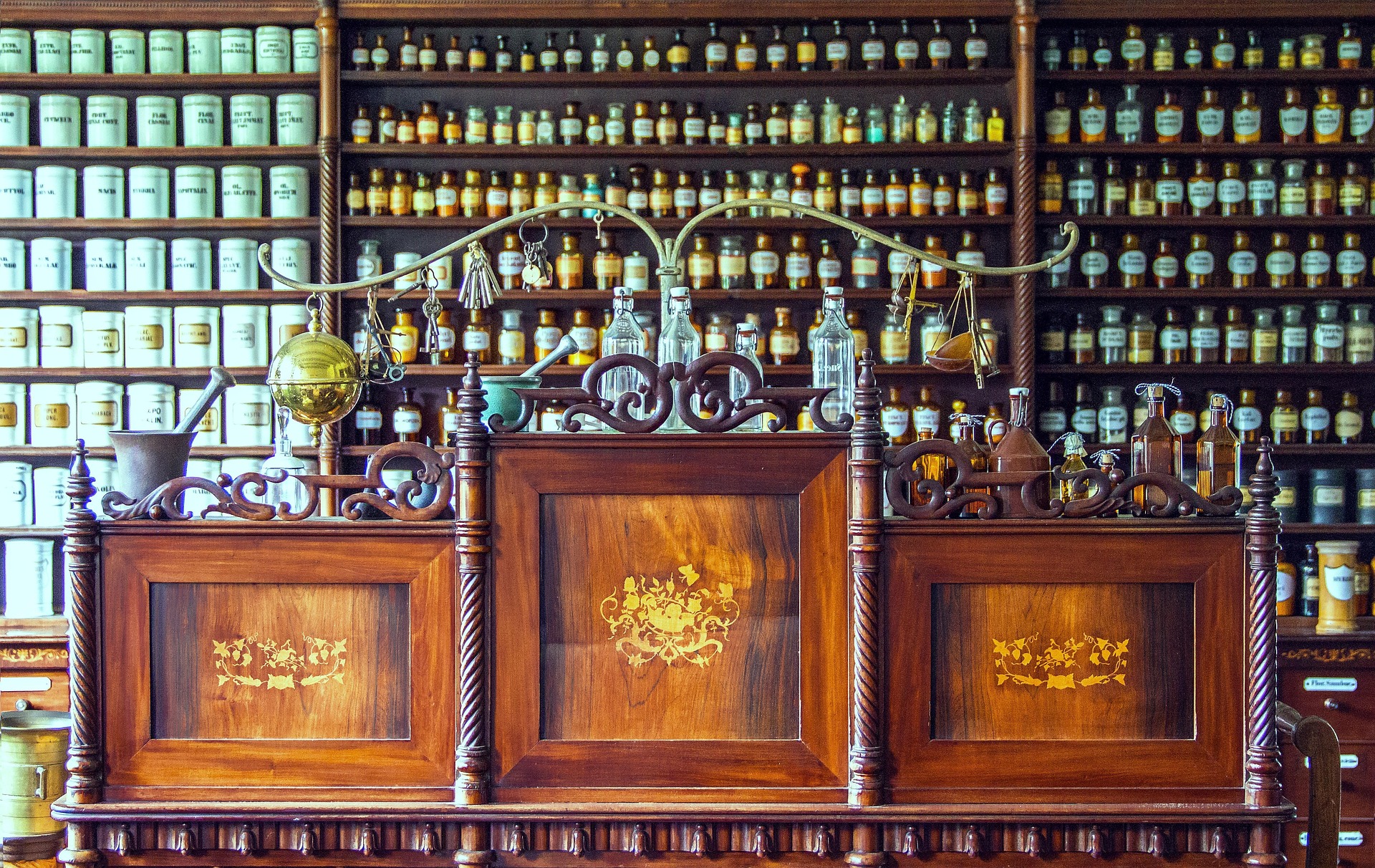
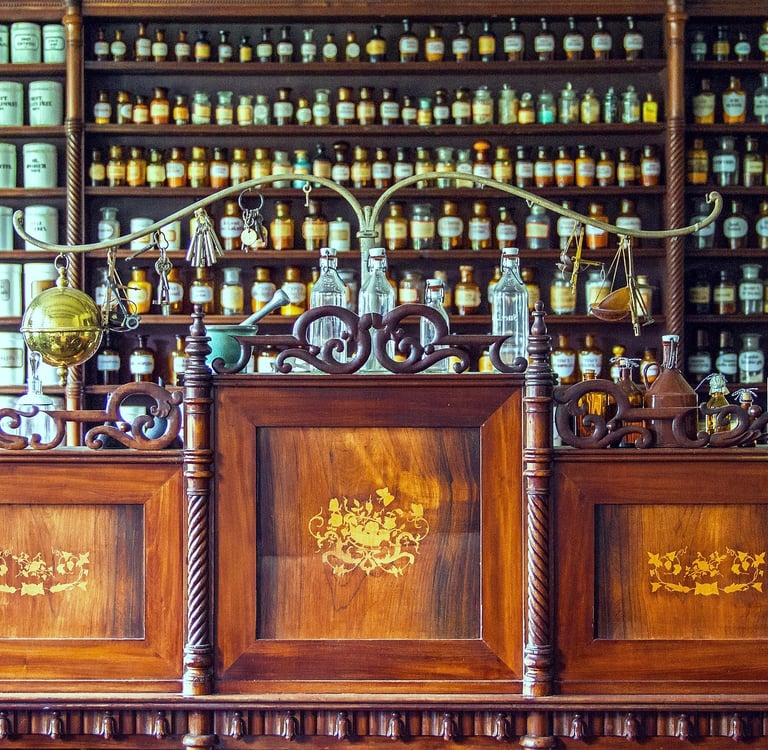
And as knowledge grew, people began to gather these remedies into special places—apothecaries, the old “medicine storehouses.” 🏺📦If you could step into one, you’d notice shelves not with paper boxes holding pills, but shelves with glass jars. 🫙✨ Shelves lined with glass vessels—some clear so you could see curled bark, dried petals, and seeds inside 🌿… and some made of dark-stained glass (often amber or deep brown) because light can spoil certain medicines. 🌞🚫🧴Inside might be stored ingredients that could be truly surprising things—like powdered “mummy”, burnt hedgehog, snakeskin, or other animal ingredients people believed were powerful and be turned into lifesaving teas, salves, and syrups. 🌿🍯🫙
An apothecary shop was a carefully arranged store of jars plus important tools to transform them. 🥄⚗️🧴 A tool you can still find in kitchens today is the mortar and pestle 🥣🪨 (the bowl and the stone “stick”), used to grind, crush, and combine roots, minerals, and dried plants into powders and pastes. On the worktable you’d also see a scale ⚖️—because measuring the right amount was key.
Little spoons, funnels, and bottles helped pour just the right amount. 🥄🔻🧪 And you can almost hear the quiet rhythm of work: grind… measure… mix… label… store. Because when pharmakeia can mean remedy or poison, every step matters. ⚖️
That’s why dosage became one of the most important “secrets” of the old apothecaries: even a good ingredient can become dangerous if you use too much, or prepare it the wrong way. So knowledge wasn’t just information—it was care. 💛
More than two thousand years ago, curious learners traveled to centers like Alexandria in Egypt 🏛️🌊 where knowledge about healing substances was collected and recorded on scrolls, then copied and carried across cultures—surviving like a message in a bottle. 🫙⏳ Ancient healers were like an “medicine detective” 🕵️♂️🌿they traveled through different landscapes and asked : “What grows here, and what can it do?” Pharmacy grew from nature on our careful record-keeping observations.
Now you know how a pharmacy looks today, and you may know its modern signs—like a red or green cross. ✚ You might also have seen an older symbol many pharmacies still use: a cup/bowl with a snake 🐍🏺—the Bowl of Hygieia. Hygieia was a Greek godess of health and cleanliness, and her name is linked to the word “hygiene.” 🧼✨ The bowl represents medicine being prepared and offered 🏺💧 and the snake represents healing and renewal—because snakes shed their skin, they look like they are becoming new again. 🐍➡️✨ It’s like an old pictograph that still whispers: “Here, medicine is prepared with knowledge and care.”
People always observed nature, the more they learned the more they experimented; drying, steeping, grinding, mixing, and storing remedies with care.🥣🪨🍵And some of those ancient remedies didn’t disappear completely. Some are still used today—sometimes as home remedies, sometimes inside modern medicines, and sometimes as local traditions. 🌿🏡💊 And you can ask your parents and grandparents too, because they may carry a family remedy passed down through generations. 💛📜
Now, let’s go out and start a local medicinal plant journal—let’s observe what grows nearby, sketch it, record where it lives, and research traditional uses. 🌱✍️🗺️
We can ask key questions for each plant we identify:
1. Is this plant poisonous—or could it hold helpful properties?
2.Which part might be used?
3.How is it prepared?
How could we find out safely—through books, experts, and research—without experimenting on our bodies!
Possible follow-up explorations:
Visit a modern pharmacy and quietly hunt for echoes of the apothecary—careful measuring, dosage, containers, tools—and then interview a pharmacist: What do they study to become a pharmacist? Do they still learn about plant-based medicines? 🫙⚖️🎤 You might also explore the oldest apothecaries/pharmacies as cultural “storehouses of knowledge.” 🏺🏛️
With Montessori joy,
Vanina 😊