From Field to Festival 🌾The Goat of Midwinter 🐐
🐐 A follow-up story that connects Fundamental Needs in History Chapter with Art Chapter: Handwork and Folk Art and even bridges to Chapter Sun and Earth in Geography Album🌾✨ It invites children to explore how one simple material—straw—meets both practical and spiritual needs. In The Straw Goat and the Spirit of the Harvest, we meet a tradition born from agriculture, tied to community, and crafted with human hands. 🌍👐 Families once believed the last sheaf of straw held the spirit of the harvest, and through careful weaving and symbolic shaping, they transformed it into a goat to guard their home through winter. 🐐❄️ This story bridges the invisible line between survival and celebration—how the same material used to thatch roofs was also used to make sacred symbols of abundance and gratitude. Children are invited to trace this golden thread across time and culture: “What else have human hands made from straw?” 🌿🎨
HISTORY STORIESART STORIES
12/19/20253 min read
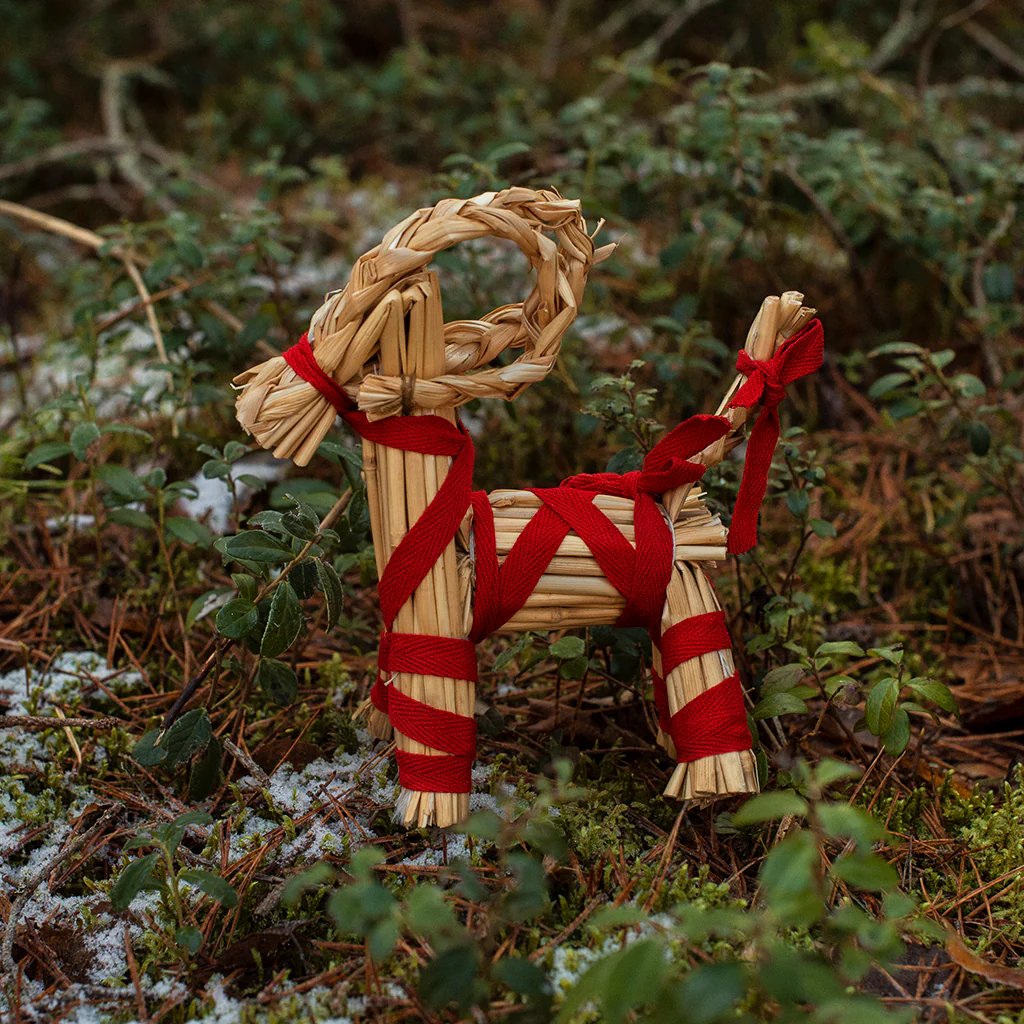
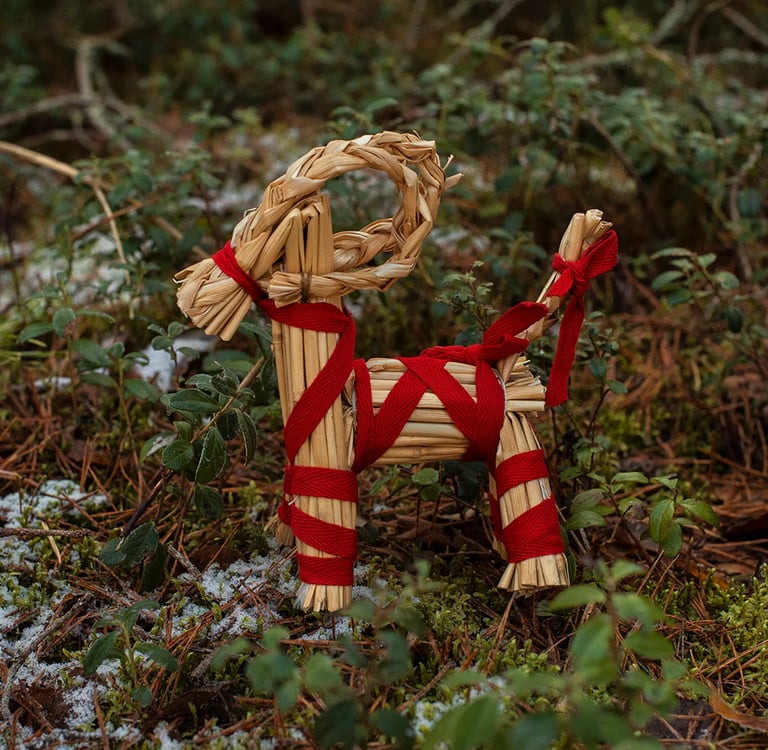
At the end of autumn, after farmers harvest the golden grain — wheat, rye, or barley — what remains are stalks, hollow and light. This is straw. 🌾
For thousands of years, people all over the world have used straw to build roofs for their homes. You may have seen thatched roofs in the countryside of different countries around the world, each with its own style, tightly tied and layered to keep families dry and warm. 🏠🌧️
But have you ever tried to make something else out of straw?
Well, people being inventive and creative have certainly tried. In Sweden, there is a magical winter tradition that uses straw in a surprising way. Every year, just as the days grow shorter and snow begins to fall, families and entire towns build something special — not with bricks, not with clay, but with bundles of straw. And what do they make?
A goat. 🐐🎄
This might seem curious at first. Why a goat? The tradition is called the Julbock, or Yule Goat, and it’s very old — older than Christmas itself. The goat was part of those early winter traditions.
Long ago, before the invention of calendars or clocks, people watched the sun carefully. They noticed that around midwinter, the sunlight slowly began returning back to the Northern Hemisphere. They celebrated this turning point in a festival called Yule — honoring the promise of light after the darkest night. 🌞❄️ We also know this turning point as the Winter Solstice. 🕰️ The Winter Solstice happens once a year when we, people living in the Northern Hemisphere have the shortest day and the longest night of the whole year.
People in Nordic Countries also shared stories about goats and gods, especially Thor, the Norse god of thunder, who rode across the sky in a chariot pulled by two strong goats named Teeth-Barer and eeth-Grinder. ( give the translations here ) These were no ordinary goats like much in mythology, they were magical. Even if they were eaten, they could be brought back to life.
But there is another story of the goat which people tell. A story which is more related with us, not with myths and legends. Long ago, when families harvested their fields, they would cut and gather bundle after bundle of grain. And at the very end of the harvest, one sheaf would be left standing — the last sheaf. 🌾
People believed that the final bundle held something special — the very spirit of the harvest. ✨ It was a way of giving thanks to the land that had fed them.
So instead of discarding it, they saved the straw from the last sheaf. Carefully, lovingly, they twisted and tied it into the shape of a goat. This straw goat would then be placed in the home, not just as decoration, but as a guardian for the winter. It watched over the house, reminding everyone of the earth’s gifts, of community, and of stories passed down through time.
Later, the goat took on new roles. In some places, people dressed up as goats during Yule, going door-to-door with music and laughter, a bit like caroling. In others, the goat became a gift-bringer, arriving before Santa Claus ever did. 🎁✨
Even now, in Swedish homes, you can still find little straw goats wrapped in red ribbon tucked beneath Christmas trees. But the most famous straw goat of all is in the town of Gävle, Sweden. Every year, the people there build a giant straw goat, sometimes over 10 meters tall! Or imagine stacking five tall grown-ups standing on each other’s shoulders… and then adding a little goat on top! 🐐📏😄 It stands proudly in the town square all through December… if it survives. 🐐🔥
Part of the tradition now includes a bit of drama: sometimes the goat is secretly burned down by pranksters, which is actually against the law — and people all over the world watch live to see whether the goat will make it to the New Year. 🎥🎄
From the last sheaf left standing in the field, to the roof of some homes, to a goat woven with care, straw has carried warmth, meaning, and creativity across cultures and centuries. It reminds us that even what is left behind, when shaped with care, can become something new, beautiful and useful.
Now I wonder... 🤔 How have people used straw throughout history? What do people make from straw in different countries today — homes, baskets, beds, shoes, mats, hats and even art? 🎨🧺 Do people still make roofs from straw?
🔍 Possible Follow-up Explorations
Explore thatched roofs from around the world:
🏠 How are they made?
🌦️ Do they last forever, or must they be repaired?
🛠️ What tools are used, and how is the straw prepared?
With Montessori joy,
Vanina 😊