From Crown to Constitution👑➡️📜🧠How Modern Societies Solve Problems
🏛️📜 A follow-up story that connects Human Geography in the Geography Album with Cultures and Civilizations, the History Question Charts, and Types of Societies, Social Revolutions, Inventions and Discovery in the History Album. ✨ It invites children to notice that “government” is not just a list of leaders—it’s an invisible web of interdependence 🤝. Through the History Question Charts, children explore governance in the past: every society faces challenges when people live together—security, innovation, meaning… but also rules that can limit freedom ⚖️—and the child is invited not to memorize, but to discuss, compare, and wonder respectfully why cultures chose the structures they did. ✨ From there, this story bridges past with present, giving children something rare and powerful: real-world orientation and agency 🫵✅. Instead of seeing broken tiles on the sidewalk, dangerous puddles, or unfair situations as “just how it is,” children learn that modern societies are organized so problems can be noticed, named, and responded to—and they discover where to go and what to do 🏛️📩. This story whispers to the children: your observation matters, your voice can be heard, and you can participate responsibly in improving the community 🌱. Children leave the story with the wonder… 💭 What responsibilities does the mayor have—and what isn’t the mayor’s job? Who decides what gets fixed first? Where does the money come from? What happens after we report a problem? And who checks that leaders follow the rules?
HISTORY STORIESGEOGRAPHY STORIES
3/13/20266 min read
Long ago, when people lived together in small villages 🏘️, they faced challenges a lot like ours today—especially fairness ⚖️. Who gets water first? Who repairs the fence? What happens when someone takes more than their share? And the big question behind all of them was: Who will do what—and how do we decide? 🤔 At first, many groups relied on custom—CUS-tom 👏👏—the “usual way” everyone remembered: a tradition people followed generation after generation. A circle of elders, or a village meeting, might listen and help decide what was fair ⚖️—who takes a turn, who helps today, and what happens if someone breaks the agreement. It worked… because the circle was small.
Then villages became towns, and towns became busy cities 🏙️. Now you could trade with merchants bringing things from far away 🧺🛒, and you might disagree with someone you didn’t even know. Memory wasn’t enough anymore. People began to write rules down so they couldn’t be changed by whoever shouted the loudest 📣. Some cities even carved rules into stone 🪨 so the law couldn’t be “forgotten.” One famous example is the Code of Hammurabi—a tall stone pillar covered in tiny writing. Imagine walking through the city and seeing the rules standing there, silent but strong… like a public promise. That’s one reason written laws mattered: they made rules visible 👀 and stable 🧱.
🤔But what if you couldn’t read, how would you learn the rule?
When rules became written, people also needed a way to make new rules—because life keeps changing 🌍🔄. That’s when a special “rule-making team” appeared: the legislature—LE-gis-la-ture 👏👏👏👏—from Latin lex/legis, meaning “law.” The legislature is a group of people who talk, listen, debate, and vote to decide what the rules should be 📜🗣️🗳️. They turn real problems into clear rules everyone can learn and follow 🧾.
And we still need them today! When new things appear, new rules are needed: computers and apps can bring rules about privacy 💻🔒, schools might decide “phones stay in backpacks during lessons” 📵🎒, and cities might make rules for bikes and scooters so streets stay safer for everyone 🚲🛴✅.
But a rule carved on stone or written on paper doesn’t fix the problem by itself. A rule can say, “Don’t break the fence,” but if the fence is already broken, the words can't fix it🛠️. So societies created a “fix-it team”—the executive—ex-EC-u-tive 👏👏👏👏—which means “the part that carries things out.” In your town or city, this team works from City Hall 🏙️🏛️. City Hall is where people answer reports, plan repairs, and send workers to fix sidewalks, streetlights, and drains 💡🧱💧. In the whole country, the fix-it team is called the government 🇩🇰🏛️. The government is divided into big teams called ministries (or departments). Each ministry has a leader called a minister—MIN-is-ter 👏👏👏—a word that means “servant,” because the job is to serve the public. One ministry focuses on health 🏥, one on transport 🚌, one on education 🎒, one on the environment 🌿.
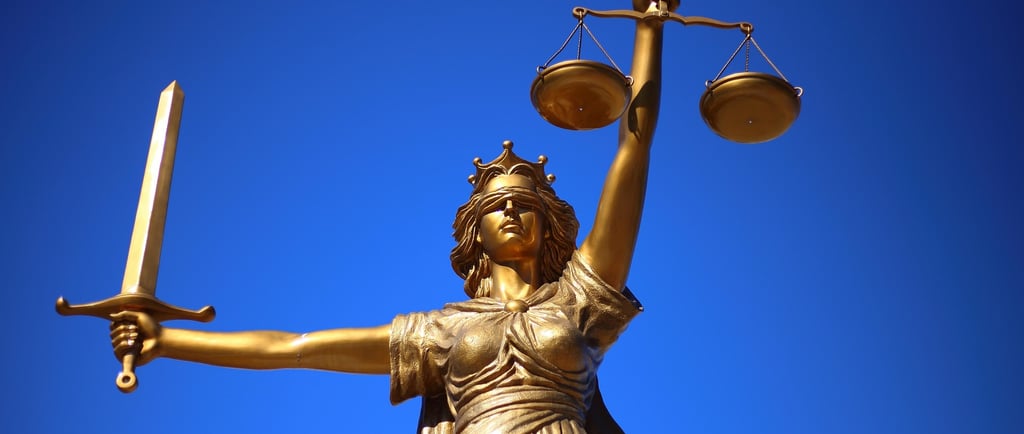
People have always wondered "If something is fair?" What if someone uses power unfairly? What if someone is punished without a fair hearing? That is why societies created the judiciary—ju-DI-ci-ar-y 👏👏👏👏—from Latin jus/juris, meaning “law/right." The judiciary is a group of courts and judges who don’t make the rules and don’t run the ministries. Their job is to check fairness: Was the rule followed? Was it applied the same way to everyone? Were people’s rights protected? ⚖️ When people care deeply about fairness, the judiciary helps keep peace—so problems can be solved with words and evidence, not fighting.
And then we notice something very small—but very real 👀: a broken tile on the sidewalk near your home 🧱, or a puddle that keeps growing every time it rains 💧. It’s not “just” a puddle—someone could slip, a stroller could tip, a cyclist could fall 🚲. You can’t fix it yourself, and you’ve seen that repairing streets takes special tools and machines 🛠️🚧. In a modern society, you don’t have to be powerful to begin solving a public problems like this—you just need to know who is responsible for fixing that hole growing on the street.🧭.
So you can actually fix this small problem on the street, you start in the closest team near you: your municipality / city 🏙️🏛️. That’s where many everyday problems are handled—sidewalks, streetlights, drainage, crossings, parks 🌳. The municipality / city has a team of people whose job is to keep these systems working. 📜In some places there is a local leader, a mayor 👩💼(governor)—who helps coordinate, but doesn’t personally fix the hole on the street or the streetlight. So you can write a letter to the mayor 📩—with the problem, the exact location and, if possible, a photo showing the problem that you have noticed. 📍📸.
But sometimes the problem is bigger than one city, so the mayor can’t solve it alone 🏙️. (And a governor—if your country has one—works at a bigger level than the mayor 🗺️.) Imagine a highway that continues through many towns is with broken crash barriers.🗺️Then a larger level of government may help organize the plan and provide money to solve it 💰✅. But you still start in the same place: you report the problem to your local municipality / City Hall📩🏛️. If it needs a bigger level to fix it, the local office will pass it on or tell you exactly which regional/state office to contact next 🔁🗺️.
Long ago, many places were monarchies 👑—MON-ar-chy 👏👏👏—from Greek roots meaning “rule by one.” There were no local municipalities with mayors. ⚔️They had another problem: What if the one ruler is unfair? Over time, people tried new systems where leaders could be chosen and changed without violence but with voting 🗳️ and sometimes people pushed for change through loud public protests ✊📣 when they felt leaders were not listening. Many societies moved toward democracy—de-MOC-ra-cy 👏👏👏—demos “people” + kratos “power,” where leaders are chosen by the people and can be removed through elections.
Around the world 🌏, people still organize themselves differently. Some countries are constitutional monarchies where a king or queen is a symbol while elected leaders govern 👑🏛️. Some are republics with presidents, some have prime ministers chosen by parliaments, some give strong power to regions, and some have one party holding most power 🔒. Different places made different choices, because they were trying to solve different problems—and every system can create new problems if power is distributed in too few hands ⚖️.
And because the world is connected, some problems can’t be solved by one country alone 🌍: pollution 🌫️, shared seas 🌊, disease 🦠, migration 🧳, trade 🛒, and safety 🛡️. So humans build bigger circles of cooperation—organizations and agreements 🤝. For example, countries may join a protect-each-other organization like NATO🛡️🤝, promising to help if one member is attacked. Other global organizations focus on peacekeeping, health, or climate agreements 🌍📜
We are all inside a living system of decisions and responsibilities—and you also have the right to speak 🫵🌱. You can notice, you can ask, you can report, you can follow up, and you can help improve the environment around you—one broken tile, one puddle, one letter at a time 🧱➡️📩➡️✅.
If you find out a broken sidewalk or a streetlight near your home 💡🧱, where you have to go? (elict responses : City Hall / the municipality 📩🏙️)
Now I wonder... 💭
Which countries in the world are monarchies today 👑🗺️—and what does the king/queen actually do there?
Which countries choose leaders by voting 🗳️—and how often do people vote (every 1, 4, 5 years… or different)? From what age you can vote?
What responsibilities does a mayor have 👩💼—and from where all the money for repairments come from?
What responsibilities does a governor have 🗺️—and how is that different from a mayor?
What responsibilities does a president (or prime minister) have 🇺🇸/🇩🇰—and who helps them do the work?
What rules are written in the constitution 📜?
Which countries today are run mostly by one party 🔒—and what are the advantages and challenges of that?
Possible Follow-up explorations🔍📚
Going Out invitation 🏛️🚶
Let’s visit the municipality and ask: ‘If there’s a broken tile near our school, who do we contact?’ ‘How do you choose what gets fixed first?’ ‘Where does the money come from?’” (invite children to add more questions )
Different Organisations Investiogation
Pick one organisation and investigate further
organization → promises/rules → who checks if rules are followed
UNHCR 🧳🏠 — refugees and safetyInternational Red Cross / Red Crescent 🩹🚑 — disaster and war-time aid
European Union (EU) 🇪🇺🤝 — shared rules for many countries
International Court of Justice (ICJ) ⚖️🌍 — countries bring disputes to a world court
International Criminal Court (ICC) ⚖️🕵️ — trials for serious crimes (not all countries join)
Interpol 🕵️♀️🌐 — police cooperation across borders
World Bank 🏗️🌍 — supports development projects
International Monetary Fund (IMF) 💰🌍 — helps countries during money crises
International Civil Aviation Organization (ICAO) ✈️📏 — flying safety rules
World Meteorological Organization (WMO) 🌦️🌍 — sharing weather and climate data
Map work 🗺️
Pick a world political map and mark with 👑 all countries that are monarchies.
With Montessori joy,
Vanina 😊